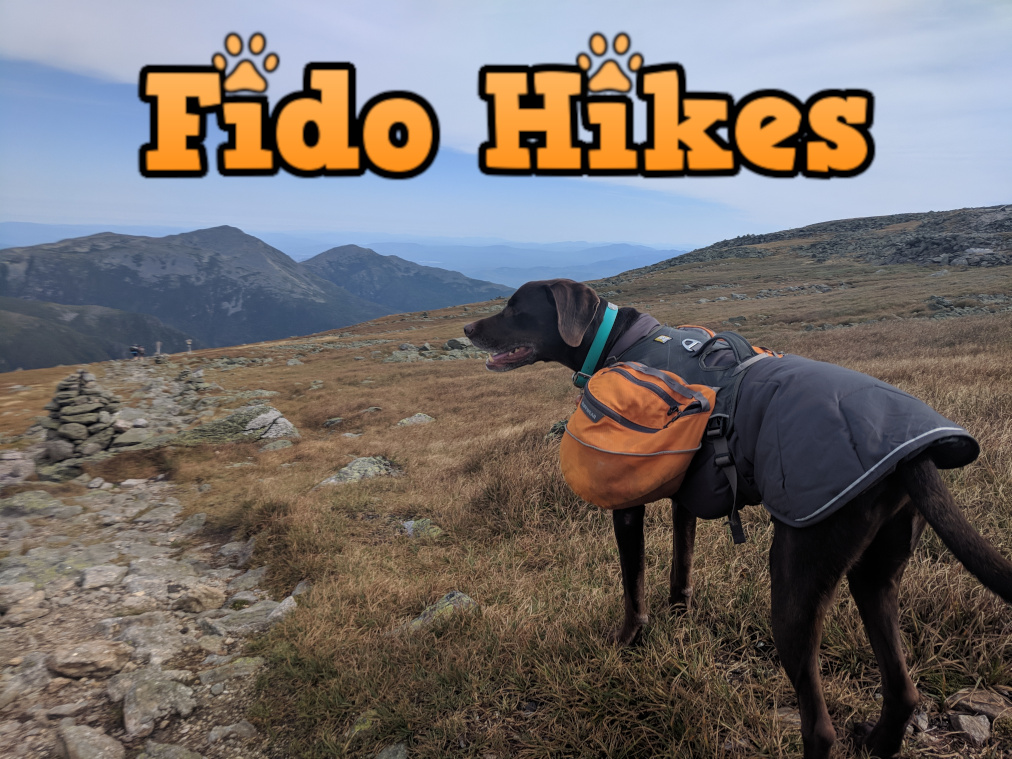
Toby hit mile two of our first Appalachian Trail section hike doing what all 75-pound labs do: he was trying to rip my arm off. I had a treat pouch, a front-clip harness, and a vague understanding of “positive reinforcement.” What I didn’t have was a systematic method. By mile six my shoulder ached, my patience was shot, and Toby had gotten exactly what he wanted every single time.
Knowing how to stop dog pulling on leash is not complicated. But it requires understanding why dogs pull, which gear works and which backfires, and how to progress from a controlled parking lot to a busy trail without losing everything you built in training. This guide covers the full method, from the science behind reinforcement timing to the recovery protocol for when your dog blows past all of it on a squirrel-scented switchback.
Before You Train: Gear That Works With You, Not Against You
The gear you start with either speeds up training or actively fights it. Most people pick up whatever leash is near the cash register at the pet store. That decision matters more than they think.
Here’s what you need before the first session:
| Item | What to Get | Why |
|---|---|---|
| Leash | 6-foot flat nylon or biothane | Consistent length is essential. No variable reward for pulling. |
| Harness | Front-clip (chest ring) | Redirects pulling sideways; pairs with training, see below |
| Treats | Small, soft, high-value | Freeze-dried meat, real chicken, cheese. Tiny and fast to eat. |
| Treat pouch | Belt-clip style | Gets treats out in under 1 second (timing matters enormously) |
| Marker word | ”Yes!” (or clicker) | Bridges the gap between the behavior and the treat delivery |
Retractable leashes are not on this list, and won’t be. A retractable leash is spring-loaded. When your dog pulls, the cord unspools and the dog gets more freedom. Every single pull is directly rewarded with more ground. The spring also creates constant tension against the collar, so your dog learns to press into resistance to move forward. This is the exact opposite of what you’re training. Switching to a flat 6-foot leash removes that structural reward from the system.
A note on front-clip harnesses. A front-clip harness attaches the leash to the dog’s chest rather than the back. When the dog pulls forward, the leash tension rotates their body sideways instead of letting them barrel ahead. This is management, not training. The harness redirects the pull. It does not teach loose leash walking. The distinction matters because owners who rely on the harness alone tend to stop training, then find that switching to a back-clip leash returns all the pulling instantly. Use the harness as a training aid that gives you enough control to actually reinforce the right behavior.
For our hikes, the harness that has held up the best over years of use is the Ruffwear Front Range. It has a chest clip for training mode and a back clip for when you’re using a pack or want more range of motion on technical terrain. The foam-padded chest and belly panels don’t rub on long days out.
Step 1: Stop Moving. The Be a Tree Foundation
The single rule that drives all of loose leash training is this: pulling stops movement, slack creates movement. Everything else is a variation on that rule. But most people execute it incorrectly, and the reason is timing.
Dogs learn through consequence, and the consequence has to arrive within 2-3 seconds of the behavior to be meaningful. After that window closes, the connection fades. So when your dog surges forward and you stop walking, you need to wait for slack in the leash. The instant you see any slack, even a half-inch, say “yes” and move forward. If you wait until your dog is back at your side before rewarding, you’ve lost the window.
Here’s the exact mechanic:
- Start walking.
- Dog hits the end of the leash and pulls.
- You stop. Plant your feet. Do nothing. Do not yank back, do not say anything, do not look at your dog.
- At any moment of slack (the leash dips even slightly), say “yes!” and immediately step forward.
- Repeat. Hundreds of times.
This is tedious. Day one of training this with Toby I covered about fifty yards in fifteen minutes on what should have been a ten-minute block walk. That’s normal. You’re negotiating a new contract with your dog, and they need time to figure out this is not how leash walks used to work.
Timeline: Days 1-7. Practice for 10-15 minutes per session, twice daily if possible.
Milestone: Your dog checks in (glances at you or shifts weight back) within 5 seconds of you stopping.
Step 2: Reward Position. Teaching the Goldilocks Zone
Your dog doesn’t yet know where you want them to be. “Not pulling” is too abstract. You need to teach a specific zone: roughly from your hip to just ahead of your knee, on either side, with slack in the leash.
Every time your dog is walking in that zone with slack in the leash, drop a treat right at your hip. The treat lands on the ground next to your foot, not in the air in front of your dog. You want the dog looking at your hip, not scanning ahead for a thrown treat.
The reinforcement rate in week one should be every 2-4 steps of walking. That sounds excessive. It is not. You’re building a neural association, and associations build through repetition, not duration. After a week of this your dog will start gravitating to your hip even when no treat has appeared recently.
As the behavior gets more reliable, thin the treat schedule gradually. Go from every 3 steps to every 7, then every 15, then variable. Variable schedules are more resistant to extinction than fixed ones. The dog keeps checking in because they can’t predict when the next reward will appear.
Common mistake: Treating from your hand in front of your body. This pulls the dog across your path and rewards them for being in front of you. Treats go at your hip.
Timeline: Weeks 1-2.
Milestone: Your dog defaults to your hip position within the first 30 seconds of a walk without any luring.
Step 3: Direction Changes. Making You the Most Interesting Thing
A dog who is watching the world ahead of them instead of you will always be one squirrel away from a pulled shoulder. Direction changes fix this by making you the most unpredictable element in the environment.
When your dog surges ahead or starts building tension in the leash, smoothly turn and walk the opposite direction. No yanking, no verbal cue, no drama. Just a quiet pivot. When your dog catches up and falls into the zone, reward.
The key word is smoothly. If you pivot hard and the leash snaps tight, you’ve added a punisher to the sequence. That can trigger frustration or reactivity. The pivot should feel like you just happened to change your mind about where you’re going.
After a few sessions of this, watch your dog’s behavior change. They start scanning rearward. They glance at your legs to see which way you might turn. They slow down to keep you in their peripheral vision. This is exactly what you want: a dog paying attention to you as a moving, unpredictable partner rather than an anchor point to drag toward the next interesting thing.
Practice figure-8 patterns, random direction changes, sudden stops. Your goal is for your dog to find you more interesting than the environment.
Timeline: Week 2, layered on top of Steps 1 and 2.
Milestone: Your dog begins checking in visually before reaching the end of the leash, anticipating your next move.
Step 4: Build the 3Ds. Duration, Distance, and Distraction
What looks like excellent loose leash walking in your living room can completely fall apart on a sidewalk, and fall apart again on a trail. This is not regression. This is how learning works. A behavior trained in one context has to be relearned in every new context. The framework for this is the 3Ds: Duration, Distance, and Distraction.
Duration is how long your dog can walk on a loose leash before checking out. Build it in variable increments, not a straight line.
Distance is how far your dog can walk nicely before the leash tightens. Start at a few feet and extend gradually over weeks.
Distraction is the one that breaks most training. Here’s how distraction levels stack:
| Level | Environment | What Makes It Hard |
|---|---|---|
| 1 | Hallway inside your house | Almost nothing, baseline behavior |
| 2 | Backyard | New smells, some stimulation |
| 3 | Quiet neighborhood sidewalk | Traffic sounds, occasional passerby |
| 4 | Busy sidewalk or park | Other dogs, bikes, children |
| 5 | Trailhead parking lot | Novel smells, excited energy, gear noise |
| 6 | Trail with low traffic | Wildlife scent, varied terrain |
| 7 | Trail with other hikers and dogs | Triggers on both sides, narrow passages |
| 8 | Active trail with wildlife | Deer scent, fresh markings, unpredictable |
The critical rule: Only increase one D at a time. If you’re working on higher distraction, keep duration short and stay close. Increasing two Ds simultaneously is why training seems to “fall apart” at new locations. You haven’t actually tested this behavior at this distraction level yet. You’re not going backward.
A fully proofed trail dog is level 7-8. That takes time, and that’s normal.
Timeline: Weeks 3-6 per major distraction level. Budget 3-6 months to reach trail-level reliability.
Milestone: Loose leash walking in environments up through distraction level 5 without reverting to pulling.
Step 5: Trail Proofing. Pavement Is Easy, Trail Is Real
A trail hike is not a harder version of a sidewalk walk. For your dog, it is a completely different sensory experience. Deer urine, rodent burrows, previous dogs who passed through, the scat of a dozen species your dog has never encountered. Add novel terrain, tight switchbacks, the sound of a stream ahead, and the sight of another hiker around a blind corner, and you have an environment designed to override every behavior your dog has learned.
This is why dogs who walk beautifully on pavement can become unrecognizable at the trailhead.
Start with a pre-hike practice session at the trailhead. Before hitting the trail, spend five minutes in the parking lot or on a flat stretch near the entrance. Reward generously. Let your dog sniff the air and orient. This lowers arousal slightly and reconnects the leash behavior to the current environment.
Plan for high reward rates in the first 15 minutes. This is when arousal is highest and impulse control is lowest. Use your best treats. Small pieces of real chicken, freeze-dried liver, or cheese will outcompete most trail smells. Standard training treats will not.
Use sniff breaks as a reward, not just treats. If your dog walks nicely for 30 seconds past a particularly tempting shrub, the reward can be “go sniff.” Say “go sniff” and let them investigate for 20-30 seconds, then “let’s go” and continue. On trail, this becomes more powerful than almost any food reward.
Know when your dog is over threshold. Over-threshold means arousal has surpassed your dog’s ability to process training. Signs: eyes fixed on a stimulus, body rigid, not responding to their name. The recovery protocol: increase distance from the trigger, wait until your dog can look at you voluntarily, reward that look, and resume. Do not punish the reaction.
Allow for setbacks at level-up moments. First time on a new trail type, first crowded weekend trailhead: expect regression, not failure. Drop back to a higher reward rate and give your dog a session or two to calibrate before expecting the behavior you’ve built.
Timeline: Months 2-6 of your training. Progress is not linear.
Milestone: Your dog walks on a loose leash for 80% or more of a moderate-traffic trail, with only occasional management stops near high-distraction triggers.
Step 6: The Long Game. When to Use Management vs. When to Train
Training and management are not the same thing, and knowing which one to use in a given moment is the real skill. Training means actively building the behavior. Management means controlling the environment so pulling can’t be rehearsed. Both have their place.
You use management when:
- The environment is too distracting for training to be effective
- You’re tired and can’t maintain the reward timing training requires
- The situation is time-constrained (crowded trail crossing, group hike)
- Your dog has not yet been proofed for that level of distraction
In those moments, the front-clip harness earns its keep. You’re not going to stop and train through a busy trailhead during peak Saturday morning traffic. You use the harness for mechanical control, get through it, and do your actual training in a lower-stakes session later.
The mistake is letting management become the default. If you rely on the front-clip harness for every walk without doing the training work, you will have a dog who walks reasonably on one specific harness and pulls on everything else. The harness is a bridge, not a destination.
Most dogs with persistent pulling also benefit from a few sessions with a certified professional trainer. A trainer can watch your mechanics, identify what’s breaking down, and cut weeks off your timeline. Look for trainers certified through the Pet Professional Guild or APDT.
For more on harness options for hiking and backpacking, see our guide to the best dog harnesses for hiking.
Frequently Asked Questions
- How long does it take to stop a dog from pulling on the leash?
- Most dogs show meaningful improvement in 3-4 weeks of consistent daily training. Reliable loose leash walking in low-distraction environments takes 6-8 weeks. Full trail-level proofing takes 3-6 months. The biggest factor is consistency: a missed day resets less than a day where pulling occasionally worked.
- Do front-clip harnesses stop dogs from pulling?
- They manage pulling by mechanically redirecting the dog sideways instead of forward. But they do not teach loose leash walking. A dog who wears a front-clip harness without training will still pull. The harness works best as a training tool, paired with the reinforcement steps in this guide.
- Why does my dog pull on leash but not at home?
- Distraction level. At home there's nothing pulling harder at your dog's attention than you. Outside, there are moving targets, novel smells, and other animals. Loose leash walking is context-dependent. Work through the 3Ds distraction ladder to generalize the behavior across environments.
- Can retractable leashes cause pulling?
- Yes. A retractable leash is spring-loaded, so when a dog pulls, the cord unspools and the dog gains more distance. Every pull is directly rewarded with increased freedom. The constant tension also trains the dog to lean into resistance to move forward. Switch to a 6-foot flat leash before starting any training.
- What if my dog pulls toward every dog we pass on trail?
- This is reactivity, which overlaps with but is distinct from general leash pulling. Increase your distance from approaching dogs before your dog notices them. Reward calm responses at distance. Slowly close the gap over multiple sessions as your dog can hold attention at each threshold.
- Is loose leash walking harder to train on hiking trails?
- Yes, significantly. Trails present distraction levels your dog has likely never experienced. The smell load from wildlife and novel terrain is categorically different from neighborhood walks. Bring better treats than you think you need, and set realistic expectations for the first several trail outings.
Trail-Tested with Toby
Everything on FidoHikes comes from real experience — 900 miles on the Appalachian Trail with our dog Toby. No sponsored posts, no armchair advice. Just what actually worked (and what didn't) on the trail.
Read our story →